Studio Booth Rental
 Green Screen Photo Booth Rental
 Glam Booth Rental
 Mirror Photo Booth
 Classic Photo Booth Rental
 Light Painting Photo Booth Rental
 Vogue Photo Booth Rental
 Glambot Rental
 360 Photo Booth Rental
 Bullet Time Photo Booth Rental
 Testimonial Booths
 Roaming Photo Booth Rental
 GIF Photo Booth Rental
 Virtual Photo Booth


 Split Flap Display
 Custom Dog Tag Station
 Giant Lite Brite
 Digital Graffiti Wall
 Retail Photo Booth Installation
 Ski Lift Photo Booth
 Custom Photo Booth
 LED Dance Floor
A testimonial booth is a capture station at an event where one guest at a time sits under controlled lighting, reads a prompt on a screen, and records a 30- to 60-second spoken answer to camera with a dedicated microphone. The clip goes to the guest and to the organizer’s library.
TESTIMONIAL BOOTH PRICE, FOOTPRINT AND SETUP
On CEG’s 2026 rate sheet, an open testimonial studio starts from $4,000 in an 8 by 8 foot space, the enclosed confessional version adds $2,000, and a tabletop audio guestbook starts from $1,000.
| Voice Capture Formats CEG Provides (2026 Rate Sheet) | ||
|---|---|---|
| Format | Price | Footprint |
| Open testimonial studio | From $4,000 | 8 × 8 ft |
| Enclosed confessional video booth | Adds $2,000 to the studio | About 6 × 8 ft, plus 3 ft of entry clearance |
| Audio guestbook | From $1,000 | Tabletop |
| Roaming testimonial booth | Quoted | None; it goes to the guests |
| Video message mode on a photo booth | Quoted | The photo booth’s own |
| Phone-link (QR) testimonials | Quoted | None; guests record on their phones |
Most setups take 1 to 2 hours, and the studio and the confessional each need one standard 15 A outlet. Book 4 to 6 weeks ahead, longer for custom branding, which needs 7 to 10 business days. Travel is quoted from the nearest CEG location and can include flights, hotels and freight. Each guest gets their clip at the station by download, text, email or QR code. The organizer gets every clip in vertical and horizontal HD with a branded overlay, intro and outro, the session and share counts in the analytics dashboard, and any guest contacts as a CSV export at any point during or after the event. An edited highlight reel, captions and transcripts are quoted add-ons.
WHAT A TESTIMONIAL BOOTH RECORDS THAT A PHOTO BOOTH DOES NOT
A testimonial booth records a guest’s voice, which a photo booth’s standard photo session does not, and that one difference sets the room, the time per guest and the staffing. A photo session runs about 60 an hour and works in a loud hall because it records no sound. A testimonial booth holds each guest for about 2 minutes, so a station serves about 30 guests an hour, in a spot quiet enough that the microphone picks up a voice instead of the ballroom.
The prompt is the actual product. A question on screen, large enough to read from the seat, is what separates a usable answer from a guest saying “so, um, what do you want me to talk about.”
Will guests actually talk to a camera?
Enough of them will: CEG’s confessional video booth recorded 25 clips at a 2024 education conference, and the station’s design decides how many. The confessional has a door, and the attendant waits outside, out of the guest’s sightline, because some people will say on tape what they will not say with colleagues watching. The open station trades that privacy for throughput and a visible queue.
WHY CONFERENCES ADD A TESTIMONIAL BOOTH
Conference guests already film each other on phones, and that footage leaves in their pockets. A station with good light and a close microphone gives the organizer footage it owns.
Freeman’s July 2026 trends report found attendees want 54% of their learning to happen outside the session room. A station beside the hallway catches people already mid-conversation.
Who inside the client organization pays for a testimonial booth?
Usually marketing, for campaign footage and customer proof. At a company summit, human resources can use the same station for recruiting footage.
TESTIMONIAL BOOTH, INTERVIEW SETUP, OR AUDIO GUESTBOOK
A testimonial booth is one of four ways to record attendee voices on site, next to an interview setup, an audio guestbook and a hired video crew. CEG provides every format in the table above but does not run interview setups or supply video crews; those come from a videographer or the event’s production company.
The testimonial booth is one guest, one prompt, one short answer, largely self-serve after a 30-second brief from an attendant. It fits volume, and the tradeoff is depth: nobody asks the follow-up question.
An interview setup puts an interviewer in the loop: two chairs and a booked slot with a speaker, an executive or a named customer, for case-study material. At 15-minute slots it records 4 people an hour, and someone has to own the calendar.
The audio guestbook drops the camera: a handset voice recorder for rooms where people will talk but will not be filmed, such as galas. Sound is harder to place in a campaign than a face, so it is an archive, not an ad.
A hired video crew is the better call for a handful of strong clips from specific people: the crew walks to the speaker instead of waiting for the speaker to walk to the station. If the production company is already filming sessions, an interview hour on their call sheet often costs less.
Two questions settle the choice: how many voices do you need, and how long does each need to talk? Volume with short answers points at the testimonial booth; a handful of people with something specific to say points at an interview setup or a crew.
WHEN A TESTIMONIAL BOOTH IS THE WRONG CALL
A testimonial booth is the wrong call in two common cases: the only floor space is too loud to record a voice, or the event is too short or the budget too small for a separate station.
A loud expo floor or a busy lobby calls for the enclosed confessional video booth, or for moving the open station into a quiet side room, which keeps the lights and the chair and gives up the walk-up traffic.
A short event or a small budget has three lighter options, and they combine. A photo booth already booked for the event can add a video message mode, which records sound, so it needs a quieter spot and slows the photo line. Phone-link testimonials need no booth and no staff: a QR code on a sign, or a link sent after the event, opens a recorder on the guest’s own phone, at the price of phone light, phone audio and fewer replies. An audio guestbook is the compact option that fits almost any room.
WHAT A TESTIMONIAL BOOTH NEEDS FROM THE ROOM
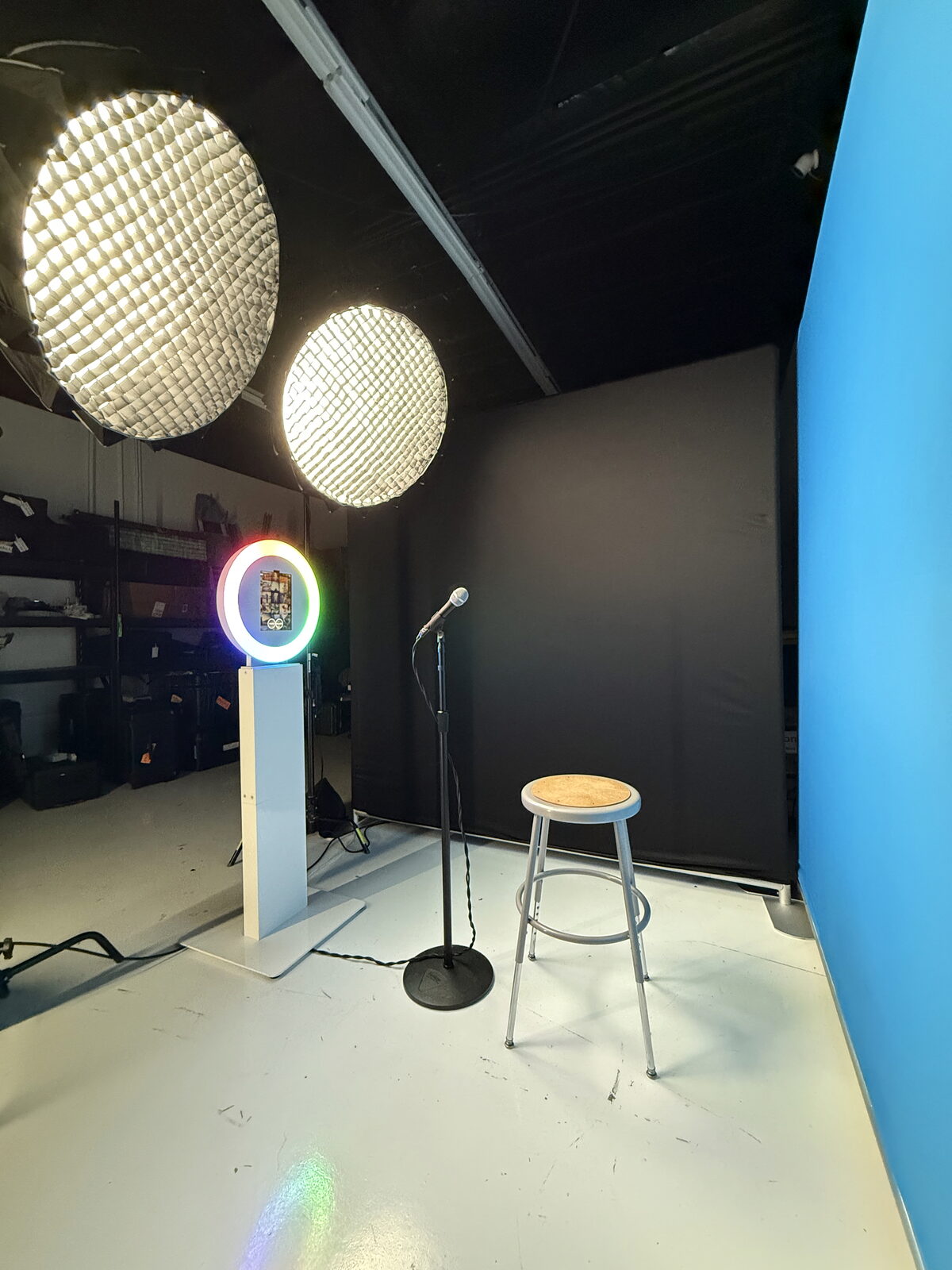
A testimonial booth needs a spot one wall back from the traffic: visible from the hallway, away from the general-session speakers and the bar. Sound is the whole constraint, so the station goes beside the flow, not in it.
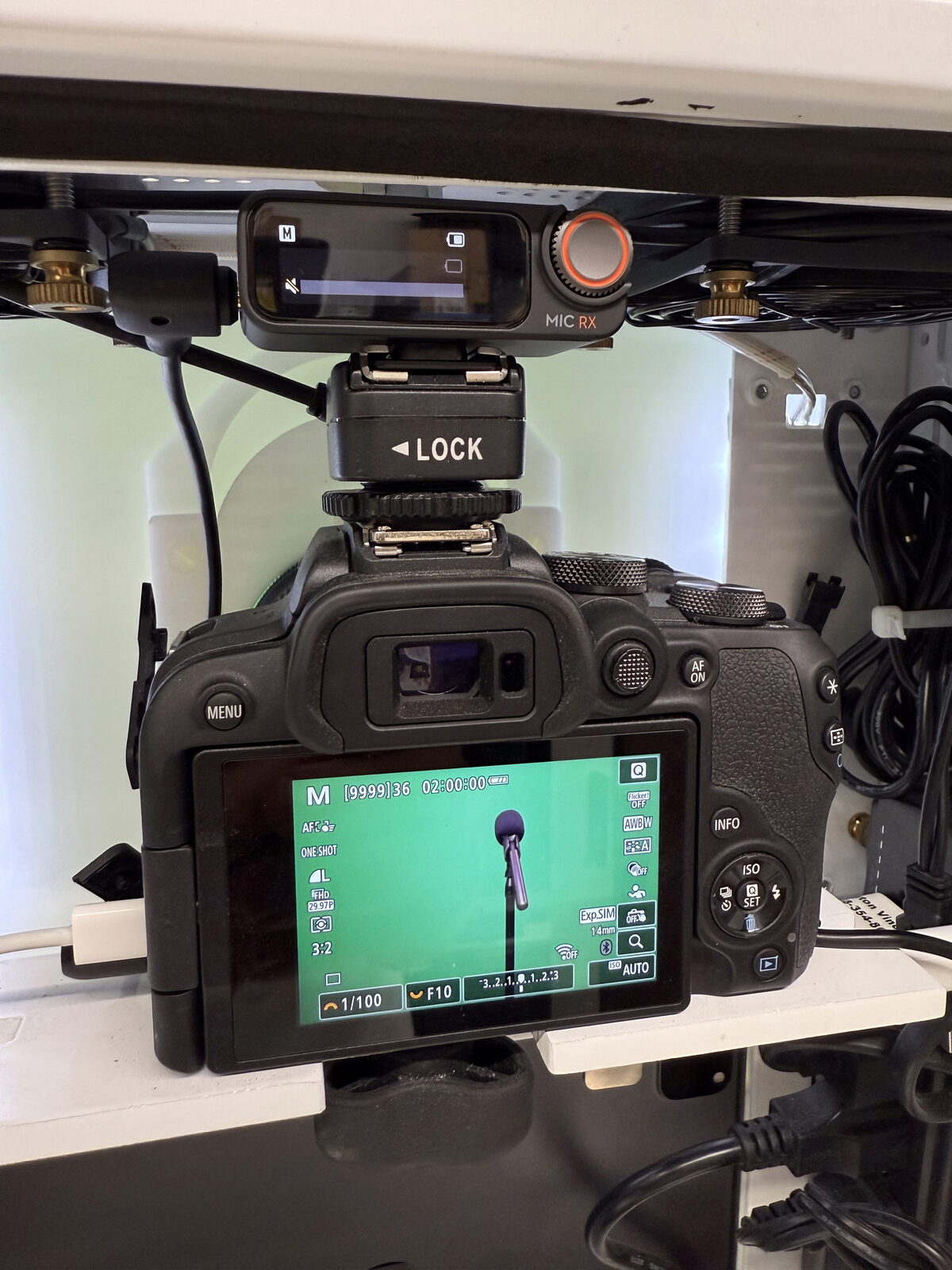
The microphone matters more than the camera: it goes close to the guest, never the camera’s built-in one, and the crew carries backup gear to every event.
“We record with noise-rejecting cardioid microphones because they minimize background noise. A condenser microphone is less ideal in a noisy room.”
Peyton Vincent, founder, CEG Interactive
Why a cardioid microphone and not a more sensitive one?
A cardioid microphone is directional: it hears best straight ahead and turns down sound from behind it. The ones built for loud rooms are usually dynamic microphones; a more sensitive condenser records the next booth’s pitch as clearly as the answer. Distance matters as much as type: each halving of the gap between mouth and microphone raises the voice about 6 decibels against the room.
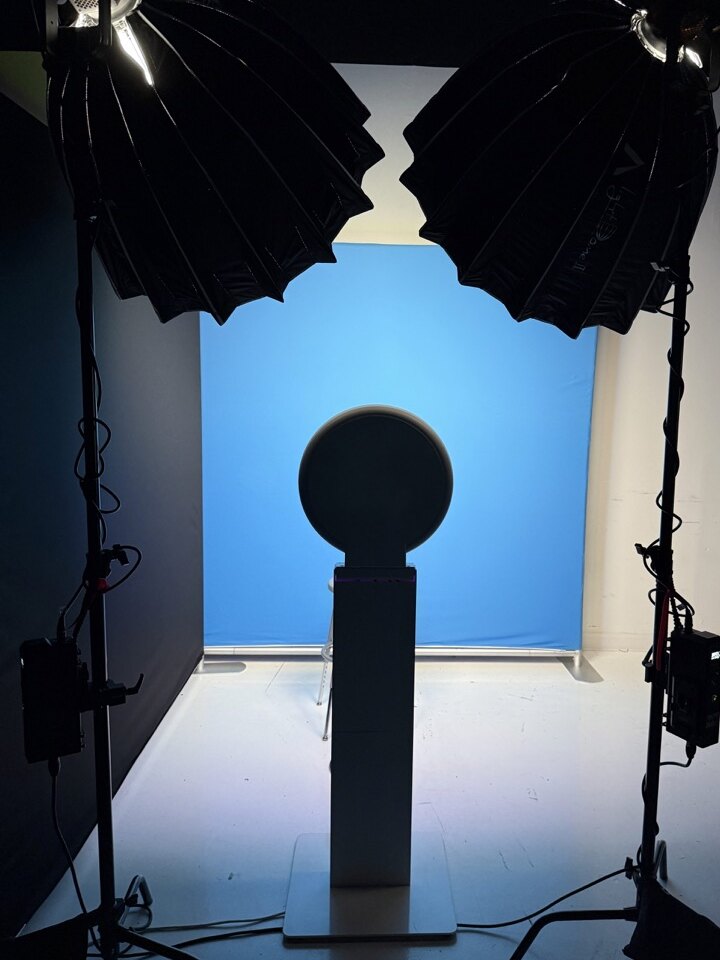
Light comes second. Two soft lights set high and to either side of the camera light a face evenly and keep eyeglasses from throwing a hotspot into the lens; a ring light as the only light is what puts one there.
HOW TO RUN A TESTIMONIAL BOOTH
A testimonial booth runs on five decisions, and most of them are made before show day.
- Prompts: 1 to 3 open questions, each answerable in under a minute, signed off by the client a week before show day, along with whether guests should name the brand. The touchscreen can show a single question or a menu of client-approved questions the guest picks from. One question gives more answers to cut together; a menu lets guests pick what they have something to say about. Ask guests to restate the question so each clip makes sense on its own. Prompts that work, by buyer: for marketing, “What problem did you come here to solve?”; for a sponsor, “What did you see on the floor today that you’ll use next month?”; for recruiting, “Why do you work here, in one sentence?”; for an association, “What would you tell a first-time attendee?”
- Clip length and volume: plan for 30- to 60-second answers. With a 30-second brief and one retake, each guest spends about 2 minutes in the chair, which is where the 30-an-hour ceiling comes from. That ceiling needs a steady queue; budget on CEG’s 2024 run, about 8 clips a day, as the realistic floor. A raffle entry or a piece of swag for recording is a common way organizers lift the count; offer it for stopping by, never for a positive answer, and any incentivized clip used in an ad must disclose the incentive under the FTC’s endorsement rules.
- Staffing and retakes: an attendant invites people in, gives the prompt, checks the audio level on the first words, and offers one retake. Keep both takes; the first is often the more honest one.
- Review: the organizer’s full set fills the event gallery as the day runs, and a named reviewer approves clips before publishing, checking for off-message answers, other brands’ names and anyone who asked to be removed.
- Captions: a published clip should read with the sound off. Captions and transcripts are a quoted add-on, or the client’s editor adds them.
TESTIMONIAL BOOTH CONSENT CHECKLIST
A testimonial booth records an identifiable person speaking, so consent is settled at capture, not after the clip is in a campaign.
- On-screen consent before the camera rolls: the guest reads what the clip is for and taps to agree, or walks away with nothing recorded. Ad use is the client’s call; CEG advises a separate opt-in line, or a signed release, for any clip used that way.
- A release that names what it covers: likeness, voice, name and title, organic and paid use, and how long the organizer may use the clip. The client’s counsel approves the wording.
- A takedown route: an email address on the delivery page.
- Minors: a parent or guardian signs before a student records, and no clip, phone number or email is collected from a child under 13 without a parent’s consent, since the federal COPPA rule counts a child’s recorded voice and image as personal information.
- Bystanders: a visible “recording” sign at an open station.
- Retention: CEG keeps the gallery and guest data available to the client, and deletes them whenever a guest or the client asks. Face analysis (AI age and gender estimates) is off by default at CEG events and runs only when the client requests it and the event’s location allows it, since states such as Illinois, Texas and Washington restrict it, with notice to guests and no names stored.
- Accessibility: a seated option, the prompt printed large and read aloud by the attendant, captions on published clips (quoted add-on, or the client’s editor), and a written or audio-only way to answer for guests who will not go on camera.
WHAT A TESTIMONIAL BOOTH SETUP LOOKS LIKE
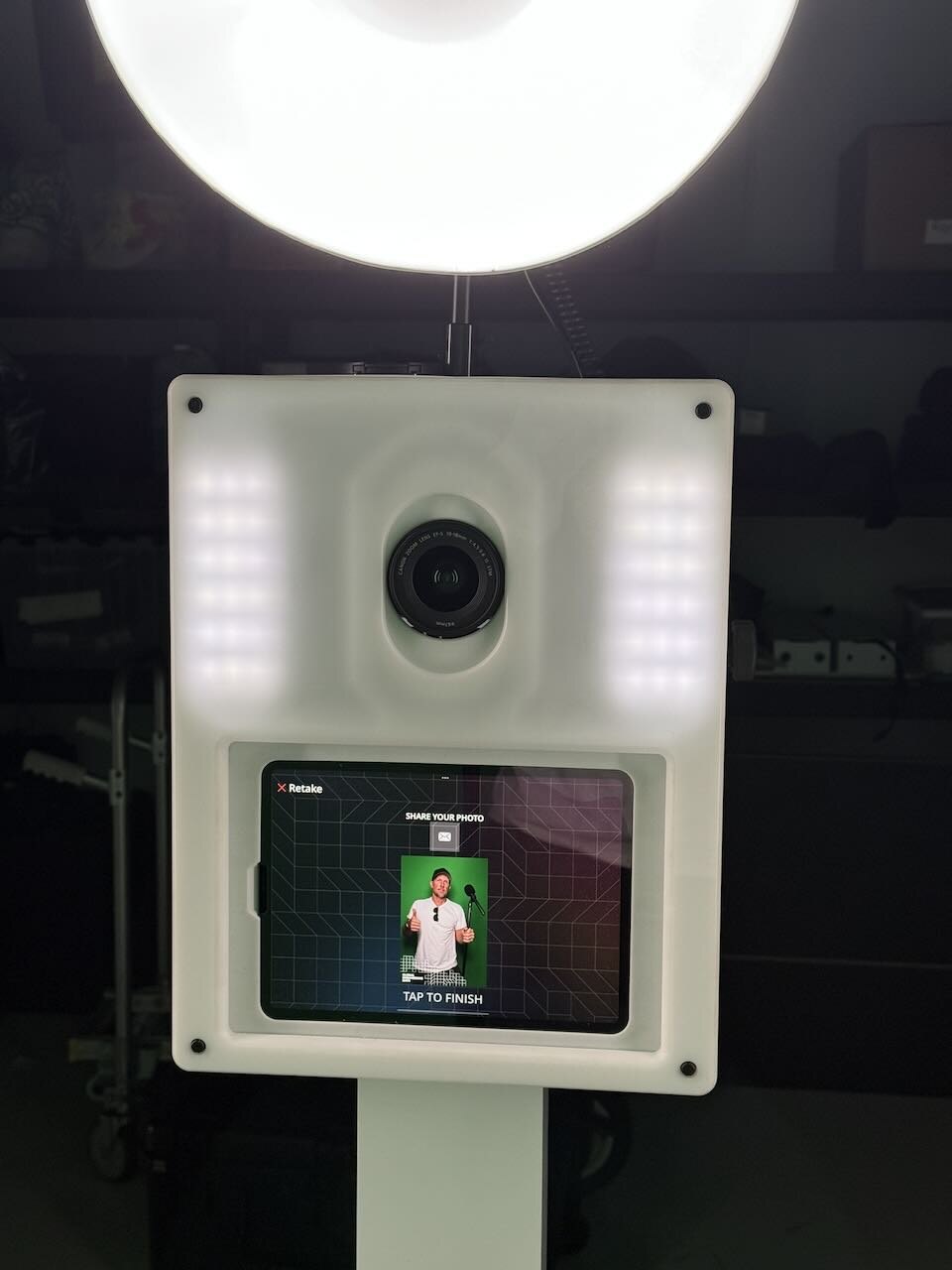
A testimonial booth setup is a seat, a backdrop, two lights and a close microphone. The photos show CEG’s kit staged in the shop.
WHAT A TESTIMONIAL BOOTH LEAVES BEHIND
A testimonial booth leaves three things behind: each guest’s own clip, the organizer’s full set, and the count of people who agreed to speak on record. Agree on a target for that count with your vendor and write it into the scope of work.
Plan the reuse before the event: a short reel for next year’s registration page, clips sent to the speakers and sponsors they mention, and the vertical clips for social with each guest’s name and title on screen.
Peyton Vincent, founder of CEG Interactive, answers a prompt in the booth: one seat, a plain backdrop and a handheld microphone on a stand.
The two sample answers below, recorded at education conferences, show what a finished clip sounds like: one person, one prompt, one answer.
A teacher at an education conference, seated against a light gray backdrop, answers what he values most in the courses he teaches.
Summary: students remember lessons that are hands-on and tell a story, especially when they see how the work connects to a future career, and getting certified to teach a biomedical science course was one of his best decisions.
A teacher at an education conference, seated against a light gray backdrop, answers what she enjoys about teaching.
Summary: she brings math and science into her classroom through hands-on projects, and the best part is watching students make something work that they first thought they could not do.
WHAT CEG LEARNED RUNNING A TESTIMONIAL BOOTH
CEG’s confessional video booth at an October 2024 education conference in the San Diego Convention Center recorded 25 clips over 3 days, about 8 a day (the event data records days, not open hours). Face counting, off by default, was enabled for that event and found 26 faces in 25 clips: almost every clip is one person alone. Guests downloaded their clips at the station, and the clips were played 54 times in the event’s online gallery.
Volume comes from an open station beside the hallway, an attendant inviting people in, and a prompt that is easy to say yes to. The 54 plays make a second point: the reuse plan decides how many people hear those voices.
Testimonial booths for conferences start from $4,000 for the open studio on CEG’s 2026 rate sheet, with the roaming, video message and phone-link formats quoted per event. CEG holds 211,000+ guest sessions on record. If you are scoping a conference, send the prompts you would want asked and the room you have in mind, and we will tell you what can be recorded there.
WHAT CLIENTS SAY
CEG Interactive averages 4.8 out of 5 across 208 post-event surveys, alongside 200+ five-star Google reviews.
WOW! The team went above and beyond to ensure our end client was happy.
CEG is always an amazing partner — already looking forward to the next event.
Always professional, accommodating, and easy to work with. Thanks, team CEG!
Peyton jumped in to find a better solution for our group and created the AR options.
We hired CEG for Burlington's Leadership Summit — our Senior Vice Presidents and executives joined in.
You're always on time, prepared for anything, and so creative. We love working with you!
Working with CEG was a breeze — they handled the entire setup without pulling our team away.
To say the photo op was a hit is the understatement of the century. People loved it!
Communicative, punctual, and professional — they take pride in their work.
CEG is always a dream to work with — professional, timely, and warm.
Everyone had a great time — the onsite staff was great!
Grant was great and did a super job. Thank you!
PAIRS WELL WITH
A spoken answer is one way to capture a guest. The report and these three guides cover the others:
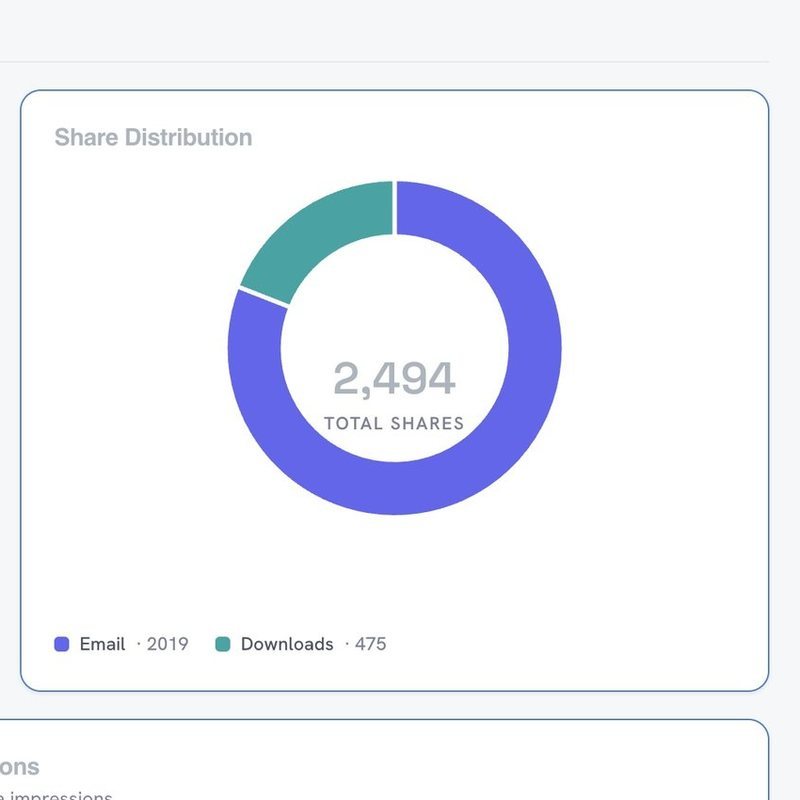
The post-event report counts every recording and every share from a station, the same way it counts photos at a booth, so the number of people who spoke on record lands on the recap.

A personalized activation hands each guest a choice of theme, product or prompt, the same lever a testimonial prompt pulls, answered with a picture instead of a sentence.
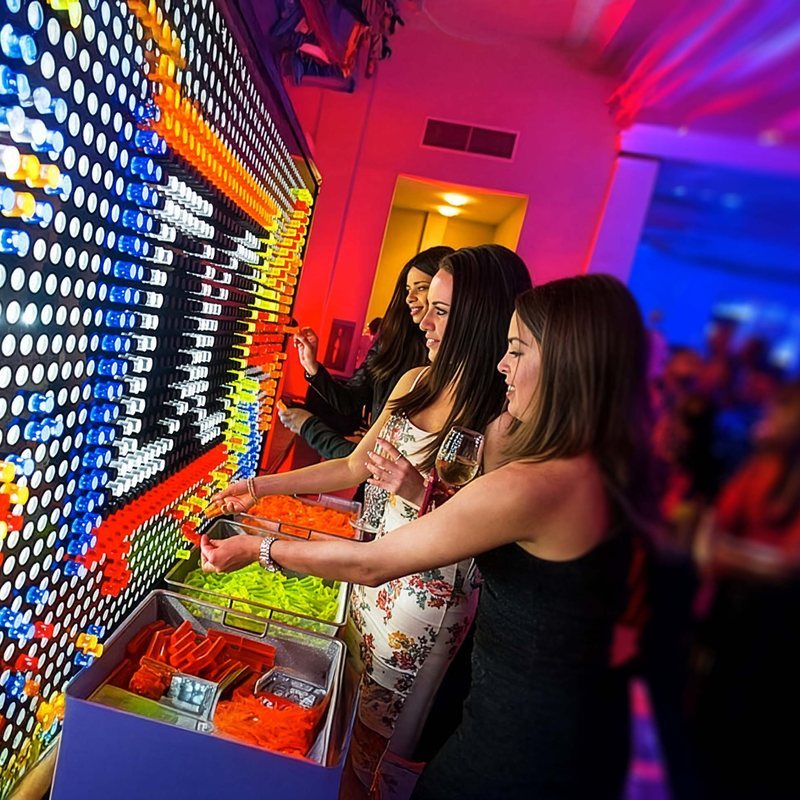
A shared build, from a giant light wall to a photo mosaic, collects something from a whole room at once instead of one voice at a time.
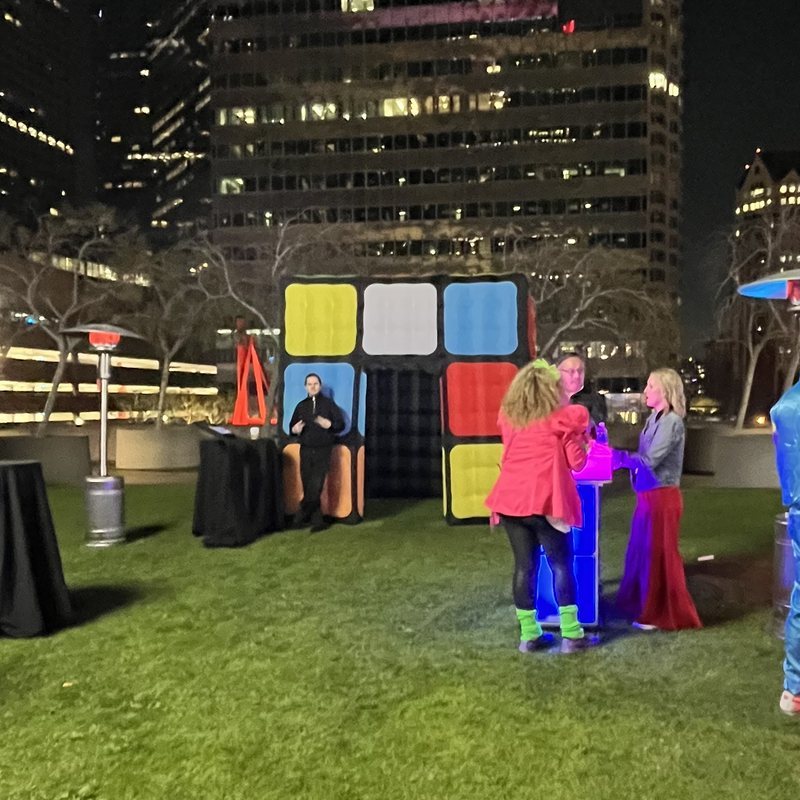
A portrait studio for invited guests runs the same controlled lighting a testimonial station needs, pointed at speakers and executives instead of the hallway.